(Background Music ~ Ian Fontova) 
Pirate Weapons
Brethren's Catalog of Weapons 
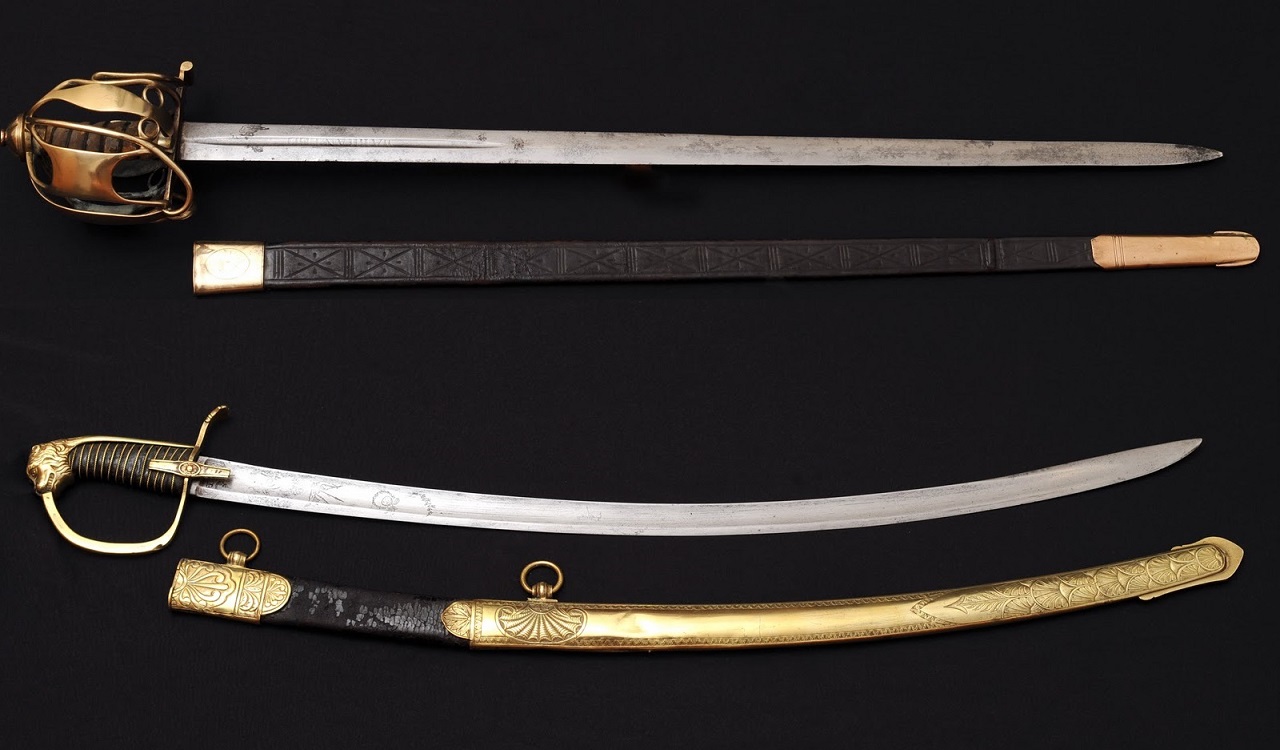
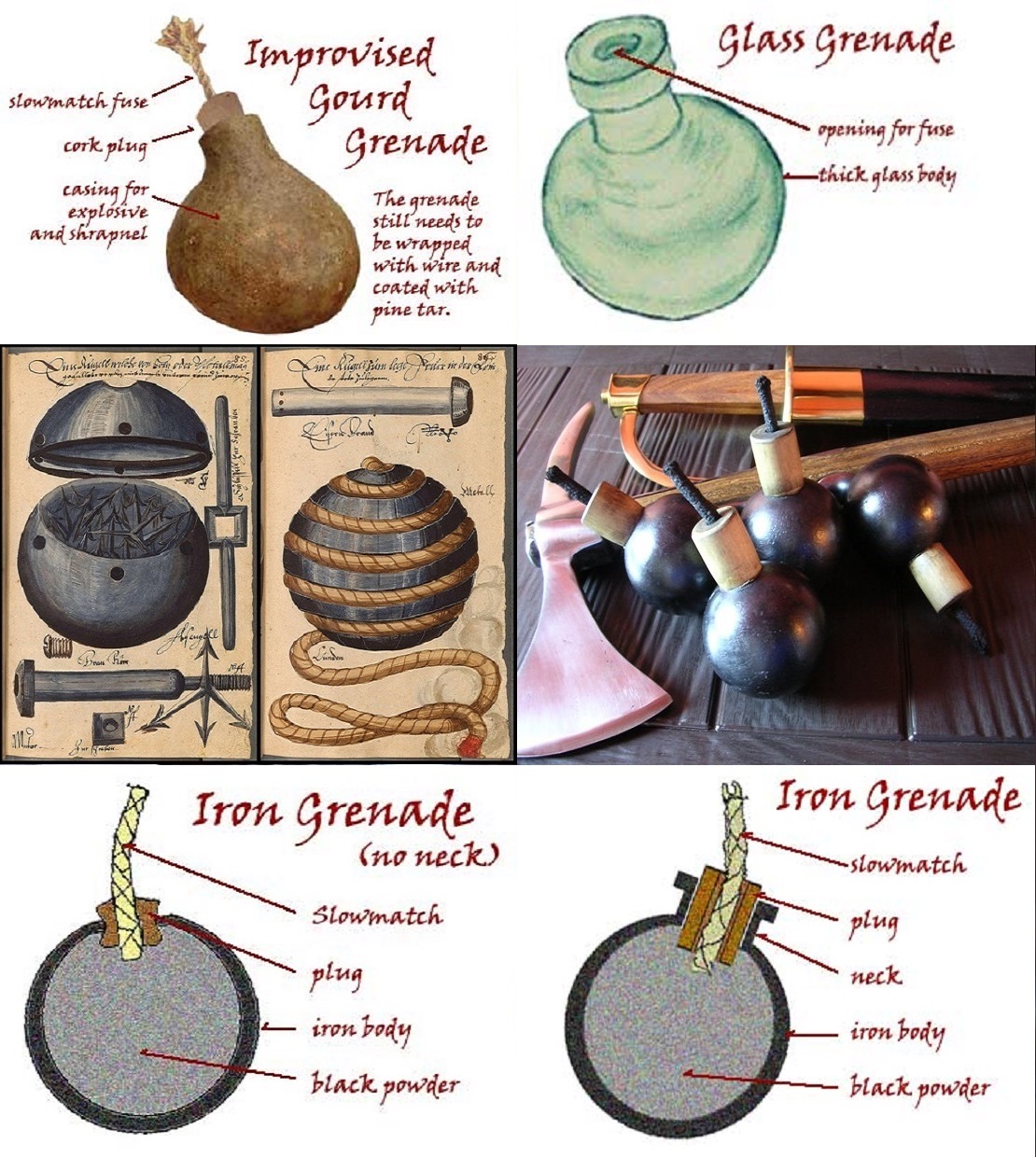
SMALL SWORD Several differant types of swords were used by pirates. They would have mainly used the most common ones found in their particular part of the world. For European pirates in the 'Golden Age of Piracy', these were normally the one handed type popular in Europe at the time called a small sword. This straight bladed short sword was designed mainly as a thrusting weapon, and was normally used for dueling. This sword weighed about two pounds, and was thirty to forty inches long. Some skill was needed to weild this sword in anger. And it could be broken if used against a heavier blade. SPADROON A light sword with a straight blade. The style became popular among military and naval officers in the 1790s, spreading from England to Europe and the United States. Hilts were often of the beaded or "five-ball" type with a stirup guard. The blade usually had a broad, central fuller and a single edge, often with a false edge near the tip. This sword was used for slashing and thrusting. Some spadroon's can also be double-edged as well. CUTLASS The pirate cutlass in swashbuckling lore is perhaps one of their most popular weapons. According to legend, buccaneers invented the cutlass, but this may not be factual. It is said to have evolved from the long knives used by the early buccaneers to butcher their meat. It had a blade length of about two feet, and was straight or slightly curved with a single edge. Strong enough to hack through heavy ropes, canvas, or flesh and bone. It's short broad blade proved to be an ideal tool for hand to hand fighting in the confined area of a ship. Making this sword a favorite weapon among Caribbean pirates in the 17th and 18th century. The cutlass was so successful it was copyed by many naval forces around the world. RAPIER The rapier was another straight bladed sword that may have been used by some pirates. It's use and popularity had diminished by the end of the 17th century, having been replaced by the smallsword. However, some skilled pirates may still have prefered it, especially the Spaniards. Rapiers were usually about a foot longer than the smallsword, and were used in much the same way. One of the more difficult swords to master, it's blade could also break when used against a heavier sword. Because of it's size and the space needed to properly use it, the rapier probably was not used much by pirates as a boarding weapon. But rather for it's intended purpose of dueling. CAVALRY & BROADSWORD The broadsword and cavalry saber may also have seen limited use. These swords weighed around four pounds, and were about forty inches in length. Broadswords had either a straight heavy blade with a double edge, or a slightly curved blade. The cavalry saber had a straight or curved single edged blade that was designed mainly for slashing. There size and the confined area aboard ships made it difficult to use these large heavy swords efficiently. However, the infamous pirate Blackbeard meet his end in battle when he was hacked to death and decapitated by a broadsword. Pirates could also have had the blades shortened on any of these longer swords to adapt them to shipboard service as needed. DAGGER & DIRK The Dagger was eccentually a small knife much the same as it is today. It was small enough to be hidden under clothing. And deadly in cramped areas where there was no space to swing a sword. Daggers weighed between one and two pounds, and were twelve to eighteen inches in length. They were carried by most sailors and pirates because of there small size and variety of uses. Such as in cutting rope, sail, and food to eat. Daggers also served as the last means of self-defence in a fight. A Dirk was just a specific type of small dagger. It was designed to be used mainly as a thrown weapon. BOARDING AXE Common and popular on ships for fighting fires and boarding parties alike. It was used by pirate crews as often as the cutlass. The boarding axe helped pirates climb the high wooden sides of a large ship. It was also very useful in cutting through the rigging lines, bring down the enemy ships sails. The boarding axe weighed around four pounds, and was roughly two to three feet in length. They were a handy tool in opening closed doors and hatches while boarding. The axe was used effectively as a deadly hand to hand fighting tool as well. BOARDING PIKE Pikes were basically long spears with a wooden handle and metal point. The ship board version of the pike was usually slightly shorter than it's land based counterparts. They could be thrown at a target, or used held by the sailor while fighting. The boarding pike weighed around six pounds, and was between four to six feet in length. It was a common weapon on board a ship. They were often kept in racks around the base of the ships mast. Because of there length, they would have been most effective against swords and knives in a boarding action. BOW & CROSSBOW These proven weapons had been used for centuries by many countries. When in range, the bow and arrow could be used by the pirates to pick off personal from the decks and rigging of the victims ship before boarding. The bow was eventually replaced by the developement of firearms. The effective range of the bow as compared to firearms at that time varied. Due in part to the skill of the user, and the quality of the firearms of the period. However, the bow could be difficult to accurately use aboard moving ships unless the wind and seas were relatively calm. MUSKETOON This was a shorter version of the musket type rifle. It was less accurate than it's longer brother. But because of it's short barrel, it was easier to use while fighting in the cramped conditions aboard a ship, where accuracy was not as important. It used the standard flintlock firing mechanism of the time. The musketoon weighed between ten and fifteen pounds, and was around two to three feet long. Many had a large bore diameter that would normally be loaded with multiple pistol type balls which spread as the shot traveled. The musketoons damage could be quite devastating at close range. Like the standard musket, it was considered a shoulder fired muzzle loaded weapon. Although the large bore versions of this weapon would probably have been uncomfortable to shoot from the shoulder, and may have been braced against something solid like the railing of the ship when fired. Unlike pistols, pirates probably only carried one of these at a time in battle because of there size. BLUNDERBUSS The blunderbuss was much like the musketoon in that it was a close range weapon. Some fired a very large ball. While most were loaded with a cluster of pistol balls, nails, glass or just about anything else that was in good supply. It was very deadly with these anti-personnel loads, and could mame and kill several people with a single blast. The blunderbuss weighed between ten and sixteen pounds, and was two to three feet in length. It had a large barrel bore diameter of around two inches. The barrel was flared outward at the end like a funnel. This odd looking flare design was supposed to help give the gun a wider shot patten. It was truely the crude shotgun type weapon of it's time, with a wide short range that could cause havoc on the crowded deck of a ship. One of the major problems with all firearms of this period, was that if the gunpowder got wet the gun would not fire correctly. And trying to keep a gun dry aboard a ship at sea could be very difficult. MUSKET The Musket was one of the first attempts at small arms with some accuracy. Which eventually became the model for the rifle. Early muskets used the old matchlock firing mechanism. But these were replaced by the flintlock which was more reliable, especially in the wet conditions aboard ships. The flintlock musket weighed between twelve and eighteen pounds, and was about four to five feet in length. The older matchlock muskets were usually slightly longer and heavier. Although the standard muzzle loaded musket had a smooth-bore barrel, some muskets used a rifled barrel which greatly increased there accuracy at longer range. The musket was not as popular a weapon like the musketoon and blunderbuss were with the pirates. This was because it was not considered as effective in close range boarding attacks as those weapons. The musket was used mainly as a long range sniping weapon in calm winds and seas, or against the opposing ships crew shortly before boarding began. FLINTLOCK PISTOL A favorite weapon among pirates for it's small size and light weight. An ideal weapon for personal defence and in boarding enemy ships. The firing mechanism was exactly like the larger flintlock rifles. Most fired a single shot and were loaded through the front of the barrel. Reloading was such a lengthy process that pirates would often carry several pistols and various bladed weapons into battle. Blackbeard was known to have carried six pistols, and Bartholomew Roberts was said to wear four pistols. These pistols were sometimes tied to their belts with silk cords to avoid dropping them overboard during a boarding attack. There was a variety of pistol sizes used by the pirates. Some prefered to carry larger ones that weighed around five pounds, and were roughly twelve to eighteen inches in length. Others carried smaller pistols that weighed about four pounds, and were six to ten inches long. These smaller pistols were normally not as accurate as the larger ones and caused less damage. But a pirate could carry more small pistols. MULTI-BARRELED PISTOL This was a muzzle loaded pistol that normally had between two and four barrels. Each barrel was designed to be fired separately. There was a wide variety of multi- barreled pistol styles that were produced at this time by the different countries of the world. Most were simply double barreled, side by side types that used two flintlock firing mechanisms and two triggers. Some used one firing mechanism, and two or more barrels that had to rotate into the correct position to fire each shot. This was known as a turnover type pistol. Multi-shot pistols were difficult and more expensive to produce than there single shot counterpart. Some were custom made for wealth individuals who could afford to adorn them with gold, silver or ivory. Making them less available and more popular among the pirates who prized them. But it could also be an awkward and heavy pistol to carry around. There reliablity could be questionable at times depending on the design type and quality. VOLLEY & POCKET PISTOLS There were other multi-barreled pistols that were designed to fire several barrels at the same time. These were called volley guns or duct foots. They normally had four or more barrels that were angled slightly to spread out the shots patten when they all fired at once. (Think of it as a sort of mini hand held shotgun.) Only effective at very close range, these pistols were not produced in any great numbers, and were not as popular as the other pistols of the time. Pocket pistols on the other hand were becoming more popular with the gentlemen and ladies of Europe. Designed to be easily carried and concealed, these convenient little pistols could be quite deadly. They were generally single shot, 'derringer' sized, muzzle loaded flintlock pistols. All were meant to be used at extremely close range to there intended target. GRENADE An early form of hand grenade that was in common use by 1700. They were also called powder flasks. The ones used by pirates were normally small hollow ceramic balls with a fuse sticking out. These weighed about two pounds, and were roughly four inches in diameter. Grenades could also be made of iron, glass or wood. Common items like small glass bottles may have been used by some pirates to make them. Most were filled with gunpowder and small metal objects, which exploded into fragments. The explosive result could cause great bodily damage, and might totally demoralize a merchant ship crews will to fight on. Some may have been stuffed with tar and rags to creat a fire or smokescreen effect. The grenades fuse was lit just before being thrown at there intended target. However, they were not totally reliable, and could present a serious danger to the person using them as well. Damp weather and climate conditions could effect the fuses and gunpowder, causing them to not always burn at the same predictable rate of speed. CANNON There were several different sizes and types of ship cannon. These guns also fired a variety of shot types. By the end of the 17th century, cast-iron had replaced bronze as the most common metal used in making cannon. This material made it much easier and less expensive to produce them in large numbers. Cannon usually required a crew of three or four men to effectively fire and reload. Taking a couple of minutes for a trained crew to repeat the firing process. It took a lot of practice and training for a gun crew to be effective. In later guns, a flintlock firing mechanism began to replace the slow burning match and touch hole. This proved to be a safer and more reliable method of fire. It worked by pulling a lanyard to activate the firing mechanism. The main guns were normally placed along the sides of a ship. Battle tactics for attacking another ship were usually a broadside style attack. This required a ship to expose it's side cannons to the enemy ship, then fire all of these guns repeatedly. A ships cannon was referred to by the weight of the shot that it fired. The cannon itself usually weighed around two hundred times the weight of the shot it fired. Hence, an 8 pounder cannon weighed some 1600lbs, but fired a 8 pound ball. The weight of gunpowder needed was approximately half the weight of the shot fired. Ship cannon were made in various sizes from small 2 pounders, to large 24 pounder ship wreckers. Shore fortifications often boasted even heavier cannons. The big 32 pounders were commonly used for this. A typical gun size on a pirate sloop or small schooner would be 4 to 8 pounders. They could fire a cannonball over 1,000 yards. But the maximum effective range was more likely 100 to 200 yards. Cannonballs did little damage at long range, and cannon fire was notoriously inaccurate. These guns also wore out relatively quick. Normally becoming unsafe to use after around 500 to 1,000 shots. Since pirates did not normally intend to sink their prey, their guns were usually loaded with a selection of ammunition effective against personnel or rigging and sails. 
Cannon Shot Types ROUND SHOT The standard iron cannonball. They were made in several common sizes but because of production quality, no two were exactly the same. These relatively loose fitting balls were not very accurate at long distances. But they could travel farther then other types of shot, making them a popular round at medium to long ranges anyway, especially in a defensive role. The cannonball would have been used at close range for it's overall destructive effects. Damaging enemy cannons, crew, masts, and particularly a ships hull in an attempt to sink it. (Sinking a ship was usually not a good way for a pirate to loot it.) Round shot were also used against shore fortifications. BAR & CHAIN SHOT These odd looking shots consisted of two cannonballs or two halves of a ball attached together either by iron bars or chains. They were designed specifically to damage a ships rigging and sails. These shots could cause major damage, wrapping around masts and reducing them to splinters, or taking out whole sails by simply ripping them to shreds. This type of shot was generally not very effective against a ships hull, and did not have the range of a standard cannonball. BUNDLE SHOT This was simply several short iron bars bundled together with a length of rope. The bundles were custom made to fit snugly inside each cannon. When fired, the rope would loosen and the iron bars would begin to spread apart. Once these bars hit something they would begin to tumble, creating devastating damage to flesh and bone, or wood and sail. Bundle shot was said to be quite impressive when used at relatively close distances. GRAPE & CANISTER SHOT Small iron balls about three quarters of an inch in diameter were packed in bags and used as grapeshot. The bag disintegrated when the powder ignited releasing a cluster of balls in a wide shot pattern. This load was very deadly against crewmen at extremely close range, and often used to repel boarders. Canister shot had a large metal container that was filled with gravel, nails, or musket balls. The container would burst when fired and scatter its lethal contents similar to grapeshot. Canister was more effective than grapeshot at closer ranges and began to replace it during the 1800s. SANGRENEL This anti-personnel round was basically a cloth bag filled with small jagged pieces of scrap iron. The bag disintegrated when the round was fired sending jagged bits of metal flying forward in a rain of destruction and terror. The wounds it could produce were horrible and there was little possibility of removing the jagged metal pieces from a body without causing even more bodily damage. Sangrenel like other anti-personnel loads was mainly used the most effectively at very close range. EXPLOSIVE SHELLS & HOT IRON SHOT These two specialty rounds came into use at the height of the great age of sail. An explosive hollow cannonball fitted with a crude fuse that was lit just before it was fired. The intent was for the shell to explode when it reached the enemy ship. Timing was critically important to be effective, and also to not have it blow up in one's face. The hot iron shot was heated to a red hot condition just before being fired. The purpose of using this shot was to set the victims ship on fire. This type of round could also be extremely dangerous to a gun crew, as the heat of the shot inside the cannon could cause the gunpowder to ignite prematurely. They should have coined the phrase "Don't try this at home" with these rounds. 
SWIVEL CANNON Swivel guns or Patarero were small cannon that were mounted on swivels along the railing of a ship. They were mainly used against personnel on the deck of an enemy ship before boarding, or in a defensive role to repel boarders. The guns were generally loaded with grapeshot just before battle. Then lifted into there swivel socket mounts which were strategically located around the railing of the ship. This allowed the guns to be placed where they would be the most effective. It also meant that a ship did not need to carry as many swivel guns. These relatively small 1 to 3 pounder guns, were more lightly constructed than regular cannon, and normally weighed roughly fifty times the weight of there shot. Swivel guns were not very effective at long range, but at close range against enemy crewmen, there firepower and maneuverability made them a devastating weapon. Chase guns could also be placed at the bow and stern of a large enough ship. This was done to attack a vessel being chased down or to damage an enemy ship in pursuit. BELAYING PIN & MARLINESPIKE The belaying pin was designed to be used to secure the ropes of the ships rigging, and not as a weapon. It was usually made from a dense hardwood that could best weather the wet and salty elements found aboard ships. They generally weighed about four pounds, and were between one to three feet in length. These large wooden pins were located all over a ship, which made them easily accessible. They could inflict considerable bodily damage when used as a club type weapon. These pins are said to have been commonly used by press gangs against unwilling sailors. The marlinespike was a tool made of metal, wood, or bone. It had a round blade with a sharp point, and typically had a round handle that could be used for pounding. This spike was intended to be used to separate strands in ropes, and they were commonly used in securing rigging lines. Normally in peaceful times most weapons would be kept away from regular sailors out of concerns that they could be used in mutiny. But some things like belaying pins and marlinespikes had to remain accessible in order to keep the ship operating properly. Because of this the marlinespike gained a reputation for being a popular mutineers weapon. 10 Most Unusual Pirate Weapons 
Page best viewed with a 1080px width. Copyright 2000-2024 Brethren of the Coast, All Rights Reserved. |